

The Parables and the Mystery of the Kingdom
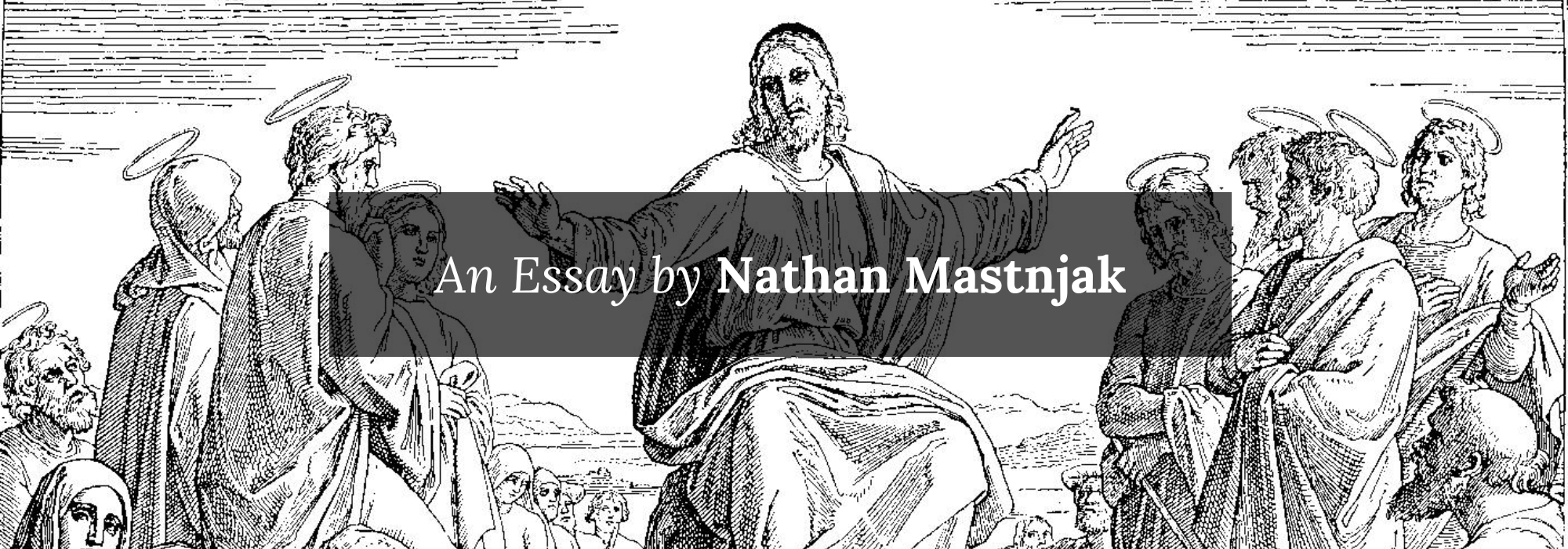
By Julius Schnorr von Carolsfeld - Die Bibel in Bildern, Public Domain, https://commons.wikimedia.org/w/index.php?curid=5490839
"Those with him and with the twelve asked him about the parables, and he said to them, 'to you the mystery of the kingdom of God has been given. But to those who are outside, everything comes in parables.'"
Mark 4:10b–11
"We discover the spiritual meaning of a mysterium, of a holy sign, only when we live the mystery."
Joseph Ratzinger, Principles of Catholic Theology, 48.
+ + + + + + +
In the Gospels of Matthew, Mark, and Luke, Jesus' public preaching is dominated by enigmatic stories and sayings known as parables. Reflecting on this raises an obvious question: why does Jesus devote so much time to these stories rather than more straightforward teaching? If, as Mark 1:15 tells us, Jesus is preaching the good news of the arrival of the kingdom of God, why does he announce it in the form of stories whose meanings are often far from clear?
The genre of parable provides the beginnings of an answer. In Jesus' teaching, some of the sayings that he calls parables are little more than images. Others, like the parable of the prodigal son, have multiple characters with complex motivations and a developed plot. Nearly all have at least the rudimentary form of a story. Jesus’ reliance on parables in his public ministry would seem to reflect the simple truth that humans are story-telling and story-listening creatures. He speaks in ways that he knows will catch the attention and linger in the mind.
This type of story-telling is particularly appropriate for a Jewish teacher in the first century. The Old Testament has its share of parables, as, for example, the parable of the trees in Judges 9 and the prophet Nathan's parable of the ewe lamb in 2 Samuel. Parallels to the language and cadence of Jesus' parables are also especially strong in later Jewish rabbinic literature.
The reason for preaching in parables, therefore, seems to have a ready explanation. Jesus speaks in parables because they are culturally recognizable ways of teaching that capitalize on the power of stories to capture the attention and imagination. Indeed, this basic purpose appears to be implied in Mark's statement that "with many such parables he spoke to them the word as they were able to hear" (Mark 4:33). The phrase "as they were able to hear" suggests that Jesus used parables precisely because they were uniquely graspable by the crowds he was addressing.
This fairly satisfying answer is, however, seemingly disrupted by Jesus' own explanation for the purpose of his parables. In each of the Synoptic Gospels, Jesus' disciples ask him directly the very question we have been considering. In each case, his answer tends in a surprising and alarming direction. Consider in particular the account in Mark 4:10–12:
When he was alone, those with him and with the twelve asked him about the parables, and he said to them, "to you the mystery of the kingdom of God has been given. But to those who are outside, everything comes in parables, in order that 'though seeing they might see and not perceive, and though hearing, they might hear and not understand lest they turn and be forgiven.'"
When asked, Jesus does not explain his use of parables in terms of their pithy and memorable nature, the natural human proclivity for stories, or their potential to successfully make the kingdom known. He asserts the opposite. He speaks in parables in order that they not perceive, not understand.
The questions this explanation raises are more troubling than the answers it ostensibly provides. Jesus would seem to be working at cross-purposes with himself. Why make his way through the towns of Galilee preaching that the kingdom of God is near (Mark 1:14–15) only to choose a form of preaching intended to prevent the message from being understood? Why the sharp distinction between the crowds who hear the message of the kingdom and the disciples to whom is disclosed the mystery of the kingdom?
Jesus' answer tells us first of all that the content of the parables is the mystērion, "mystery," of the kingdom of God. Describing the kingdom of God here as a mystery is important. The kingdom by its very nature is hidden, and it violates expectations for the restoration of a Judean monarchy. The form of the parable, which hints at but does not openly speak its truths, is peculiarly appropriate for the content of Jesus' preaching, which is the announcement of a mystery. Jesus invites his hearers into the spiritual mystery of the kingdom by entangling them in the interpretation of the literary mystery of the parable.
Jesus also draws a sharp line here between those on the outside, the crowds who hear everything in parables, and the disciples, to whom he explains the parables and discloses the mystery of the kingdom of God. But is Jesus' preaching really to be understood as a way of excluding people from the possibility of repentance? Does he really tell parables "so that they may not turn and be forgiven?" This teaching, shocking as it is, has the rhetorical effect of goading us to make sure that we find ourselves among those on the inside to whom the mystery of the kingdom is revealed. This rhetorical purpose points a way forward through this jarringly harsh saying. If we ask what exactly is the distinction between those on the inside and those on the outside, Mark makes it clear that the "inside" is not a narrow and exclusive group. It is not merely the select group of twelve apostles but all "those who were around him with the twelve." In other words, it is a self-selecting group consisting of all those who have attached themselves to Jesus as disciples. Those "outside" are precisely those who have heard and seen Jesus but not yet drawn near to him as disciples. In other words, those who are there with Jesus to hear the explanation of the parables are those who have already grasped on some level the mystery that the parables disclose, the mystery of a kingdom in the human form of Jesus.
Those who have attached themselves to Jesus as disciples are precisely those who are hermeneutically disposed to begin to grapple with the parables' meanings. Interpreting them requires entering into the symbolic worlds they create and frequently entails a reinterpretation of the world outside the bounds of the story. To see the kingdom as a mustard seed or as leaven worked into dough requires a reordering of what we thought the kingdom was supposed to be. To grasp the parable of the sower requires grappling with the different receptions that the word will find in different hearts. It requires contending with the enmity of Satan and above all with the identity of the sower himself. The parables again and again present both a challenge and an invitation: a challenge to interpret the kingdom of God as having come with Jesus, and an invitation to attach oneself to Jesus as a disciple. The hermeneutical situation of the parables is captured well by Ratzinger's paraphrase of Origen's teaching on spiritual interpretation: "We discover the spiritual meaning of a mysterium, of a holy sign, only when we live the mystery." The parables draw the hearer into an interpretive process that is resolvable only when one has already begun to enter into and live within the kingdom of God.
Jesus' explanation of his reason for the parables, therefore, hints at their interpretive complexity and the form of discipleship that they ultimately entail. After explaining that the parables are intended to veil the mystery of the kingdom (Mark 4:11–12), Jesus provides a point by point interpretation of the parable of the sower (Mark 4:13–20). The parable emphasizes the distinction between those who have entered into the mystery and those for whom it remains hidden.
Having explained the parable of the sower, Jesus immediately tells another brief parable: "He then said to them, 'does a lamp come in order that it might be placed under a bed rather than that it be placed on a lampstand? For nothing is hidden except that it be made manifest nor is anything kept secret but that it become known" (Mark 4:21–22). The theme of hiddenness and its purpose signals that this parable is a continuation of Jesus' discussion of the purpose of parables. He has already indicated that he speaks in parables in order to conceal the mystery of the kingdom. Now he adds that this concealment intended by the parables has a further paradoxical purpose. The parables conceal in order to reveal. They contain a secret in order that it might become manifest.
This paradox brings us to a larger theme that appears with particular emphasis in the Gospel of Mark. Throughout his public ministry, Jesus engages in the work of the kingdom by healing the sick and casting out demons. These acts disclose the presence of the kingdom, and yet he repeatedly insists that the beneficiaries of these miracles keep them secret (see e.g. Mark 1:44; 5:43; 7:36; 8:30). He preaches the kingdom but conceals it in parables. He does the work of the kingdom, yet he insists on its secrecy. Why?
Mark shows us again and again that part of the irony of Jesus' instructing his disciples directly lies in how consistently they miss the meaning of the mystery. As the disciples will need to learn, the reality of the kingdom is wrapped up in the mystery of the Messiah who suffers. Jesus will wait until Peter's confession of him as Messiah to begin teaching that as Messiah he must suffer and die for his people (Mark 8:31–33). Peter's rejection of this teaching shows the wisdom and necessity of a revelation of the Messiah that proceeds slowly and through an initial partial concealment. Ultimately, the mystery of the kingdom and the true nature of the Messiah will not be fully disclosed until his passion and resurrection. The mystery of the kingdom and the mystery of Jesus' Messianic status are concealed, therefore, in preparation for the revelation of a Messiah who suffers. And as the disciples will learn all too soon, a Messiah who suffers entails a form of discipleship that requires one to take up a cross and follow.
Nathan Mastnjak is an Assistant Professor of Hebrew Bible/Old Testament at the University of Notre Dame in South Bend, IN, and the author of Before the Scrolls: A Material Approach to Israel's Prophetic Library (Oxford University Press, 2023) and Deuteronomy and the Emergence of Textual Authority in Jeremiah (Mohr Siebeck, 2016).